

3D Scanning of Parts and Components
High-precision digitisation with Creaform HandySCAN scanners, performed on-site for clients across Spain and Europe. From 5 cm parts to 10-metre components: reverse engineering, dimensional inspection and complex geometry capture with accuracy up to 0.025 mm.
Two Scanners, Any Part Size
From the physical world to the 3D model: with the HandySCAN BLACK+ Elite and the HandySCAN MAX we digitise anything from a 5 cm part to 10-metre components, with total fidelity to the original part.
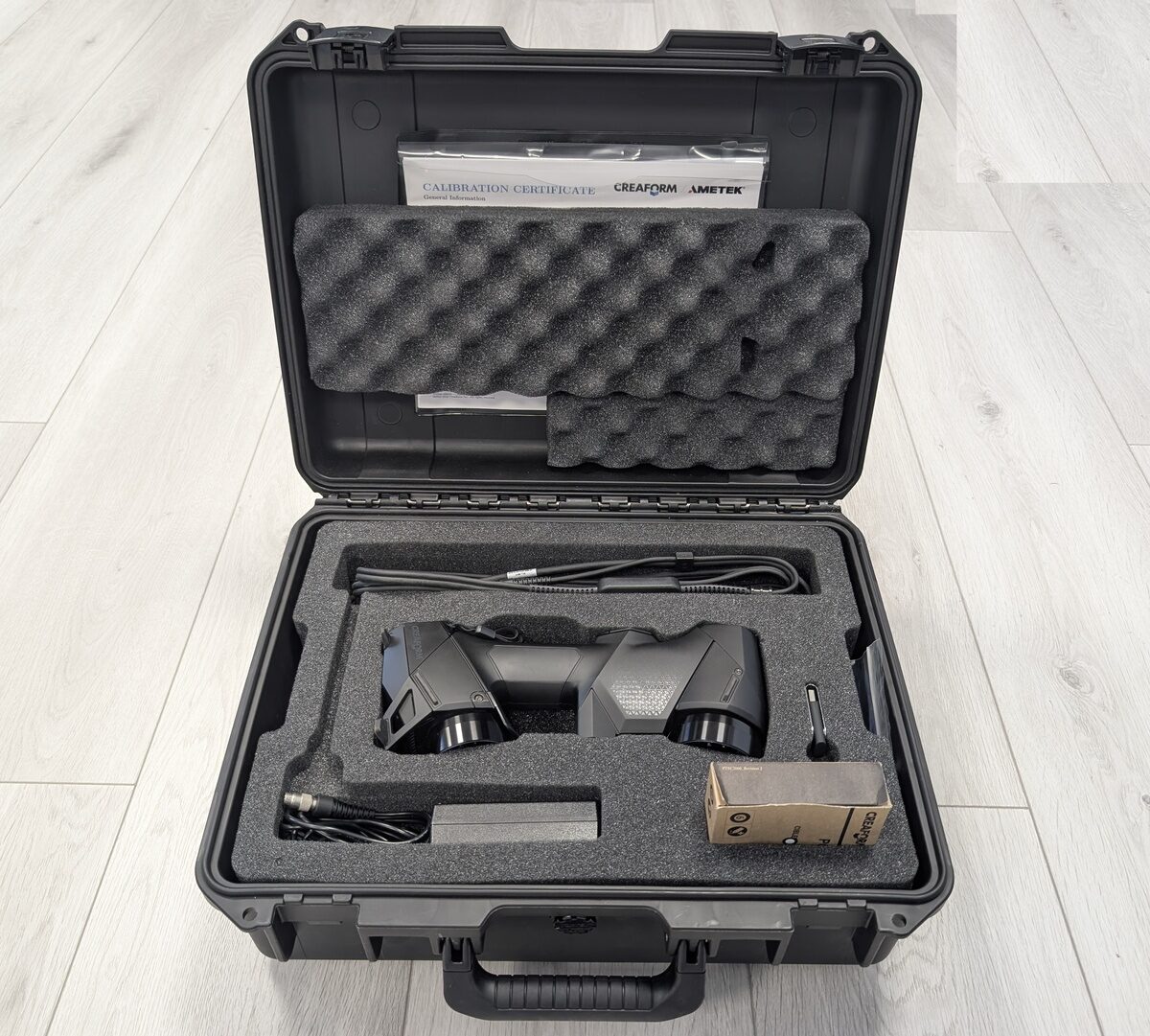
Creaform HandySCAN BLACK+ Elite
Our highest-resolution scanner for small and medium parts. It captures every detail of the geometry to deliver 3D models faithful to the physical part: reverse engineering, moulds and spare parts without drawings.
- Accuracy: 0.025 mm
- Range: Parts from 0.05 to 4 m
- Technology: 30 blue laser lines
- Ideal for: Parts, moulds, components without drawings
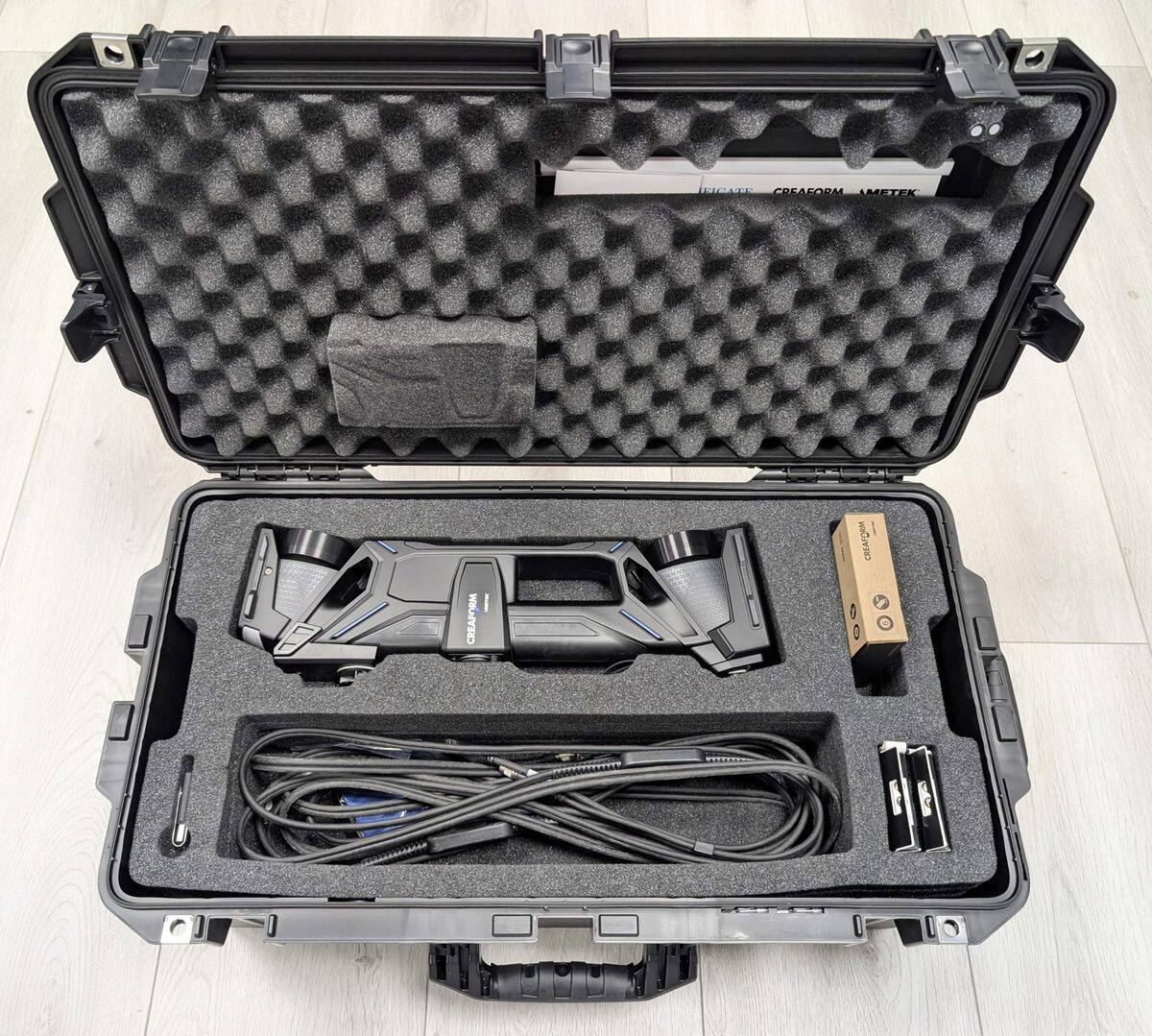
Creaform HandySCAN Max
For large parts, components and complex surfaces, directly on the shop floor. Portable blue laser technology with sub-millimetre precision.
- Accuracy: ±0.15 mm
- Range: Parts from 1 to 10 m
- Technology: 38 blue laser lines
- Ideal for: Large parts, tooling, structures, frames, general layouts
High-Precision Blue Laser Technology
The short wavelength of blue laser light enables higher precision on shiny, dark and complex surfaces that conventional lasers cannot resolve.
How Does It Work?
Our Creaform HandySCAN scanners use blue laser technology combined with high-resolution cameras that capture the geometry of surfaces as the operator moves the scanner around the part.
The result is a triangle mesh that faithfully reproduces the part geometry: with an accuracy of 0.025 mm on the BLACK+ Elite (parts from 0.05 to 4 metres) and ±0.15 mm on the MAX (parts from 1 to 10 metres).
The system uses reflective targets placed on or around the part for positioning and alignment during scanning, ensuring accuracy even on large parts.

Our Team Scanning in the Field
This is how we work: we scan directly at the client's facility and obtain the 3D model in real time.
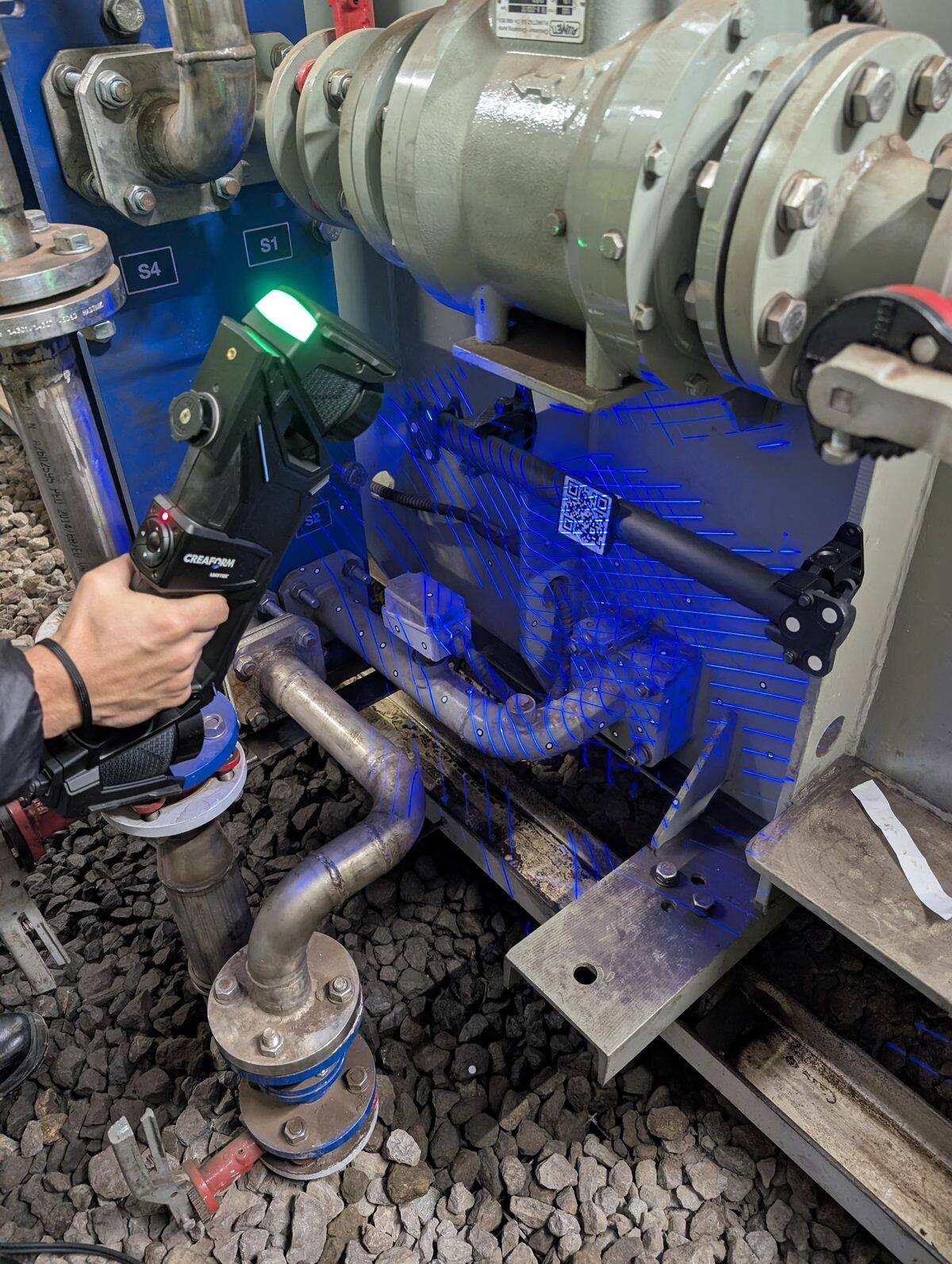
On-site scanning
Our technician captures the machinery geometry directly on-site with the Creaform HandySCAN Max.
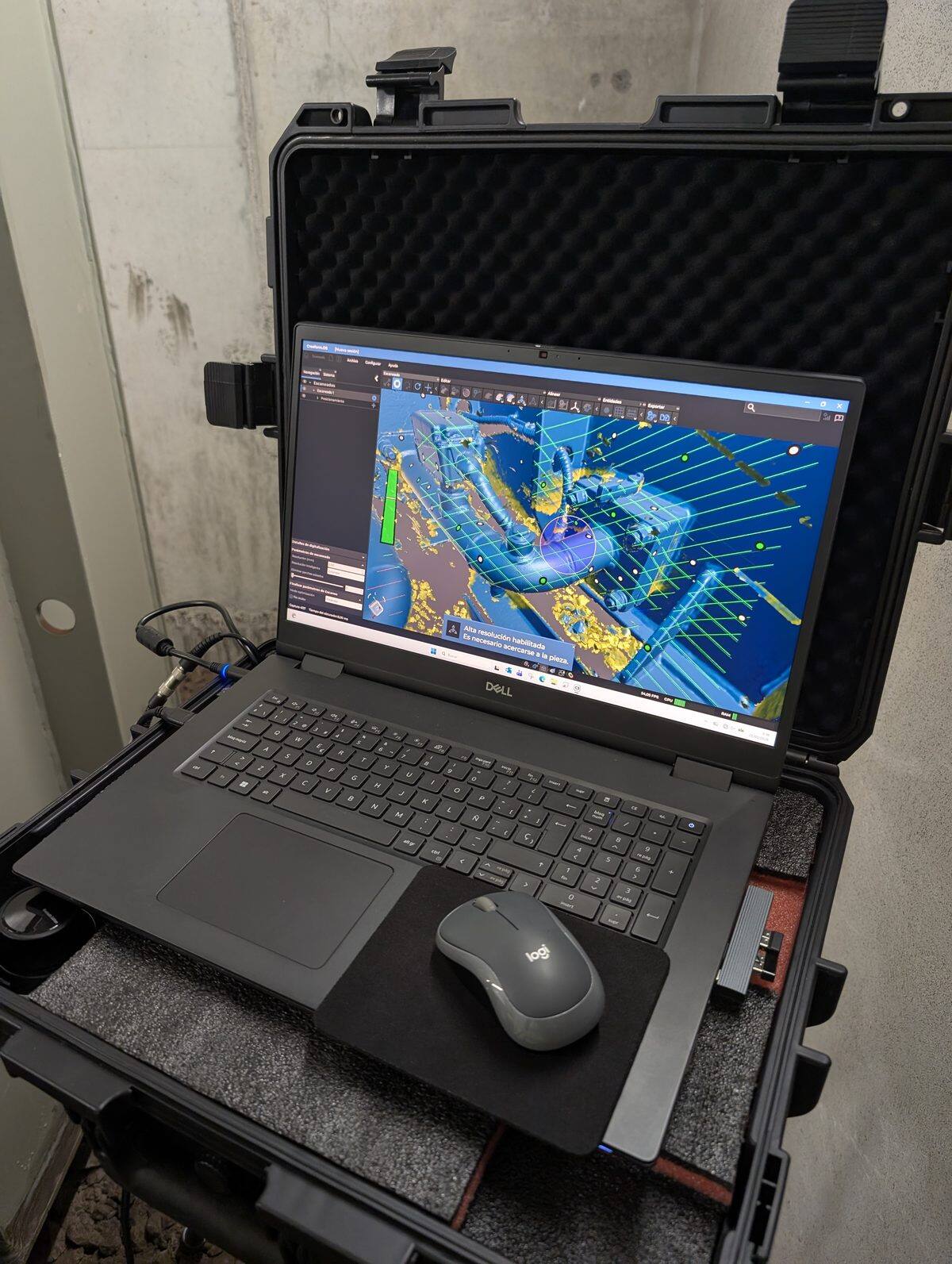
Real-time result
The 3D model is generated while scanning, allowing instant verification of coverage and capture quality.
From the Physical World to the Digital Model
The precision of our HandySCAN scanners delivers faithful 3D models of parts and components, and enables dimensional comparisons with professional detail.
Dimensional Inspection and Quality Control
Comparison between the scanned part and the nominal CAD model. We generate chromatic deviation maps that visually show the differences, along with detailed measurement reports with tolerances.
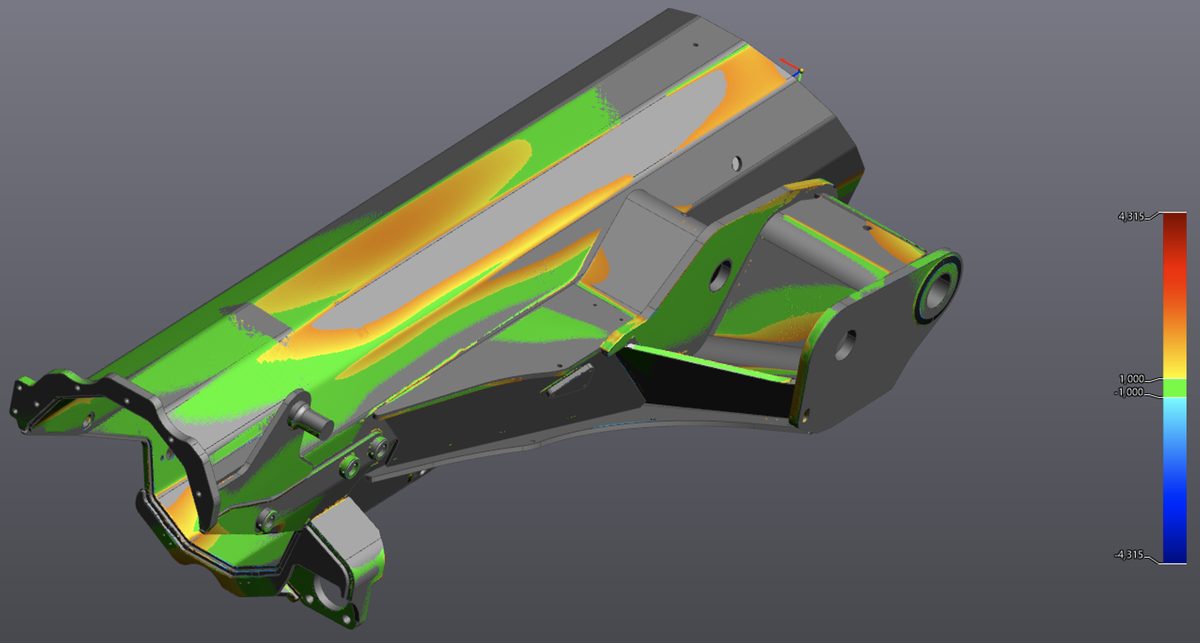 Chromatic deviation map
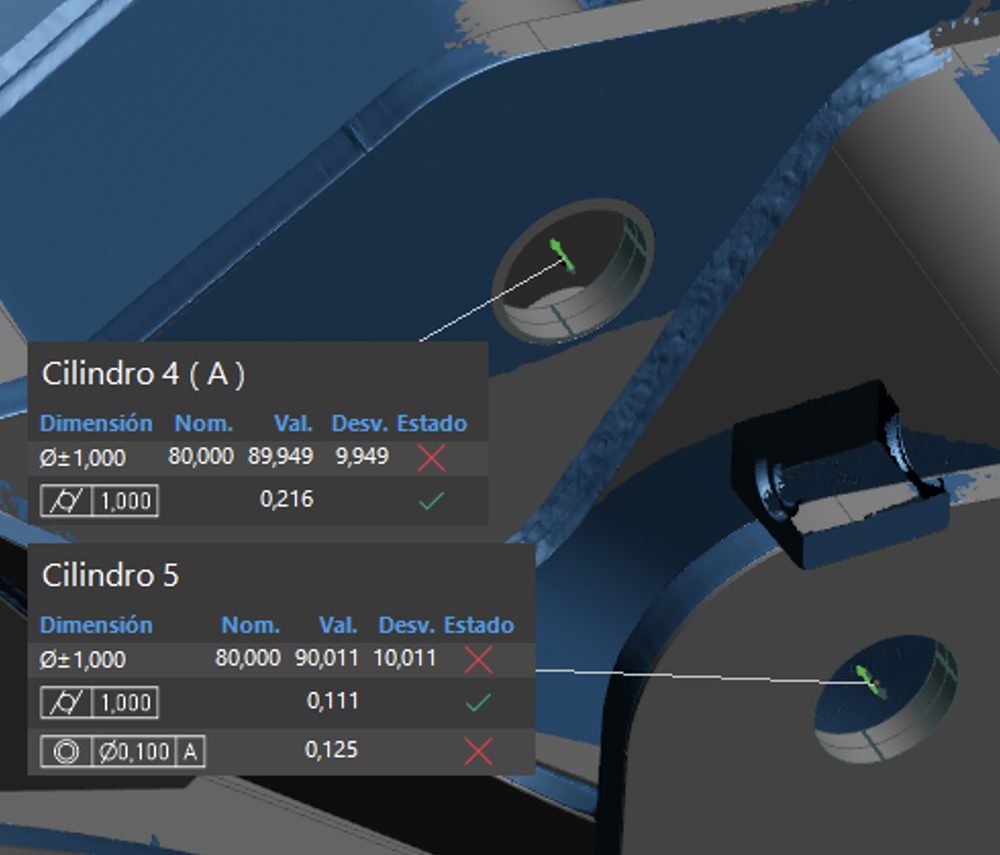 Inspection report
Need to rebuild a part's CAD model with no drawings to manufacture or modernise it? That's reverse engineering — we cover it in detail, with real cases (hardness tester, automotive, industrial tank), on its own page.
Need to scan industrial facilities or large spaces? See 3D Scanning of Facilities →
Our Scanning Process
An optimised workflow that guarantees precision, efficiency and professional quality results.
Analysis
We evaluate the part or component, define the capture strategy and prepare the reference targets.
Capture
We scan the part on-site with the most suitable Creaform scanner for its size, ensuring complete coverage of all surfaces.
Processing
We align and merge the captures. We generate triangle meshes, NURBS surfaces or solid CAD models as required.
Delivery
We deliver in the format you need: STL mesh, STEP/IGES surfaces, editable CAD solid or dimensional inspection report.
Sectors That Trust Our Scanning
Proven experience serving the most demanding industrial sectors across Spain and Europe.
Automotive
Scanning of components, tooling and dimensional control of body parts.
Aeronautics
Digitisation of aeronautical parts, inspection of critical components and tooling.
Industrial Machinery
Reverse engineering of equipment, facility documentation and component redesign.
Naval
Scanning of hulls, structures and naval components for repair and retrofitting.
Everything About 3D Part Scanning
Related articles
Case study: 3D scanning an industrial tank
Scanning on a factory roof with the Creaform HandySCAN MAX to manufacture a twin tank with no drawings.
How to digitize a part without original drawings
Step-by-step guide to digitizing parts without technical documentation, from 3D scan to CAD model.
Structured light vs laser 3D scanner
Practical comparison of the two main 3D scanning technologies: precision, speed, part size and cost.
How much does industrial 3D scanning cost
A transparent breakdown of the factors that determine the price of a 3D scanning service.